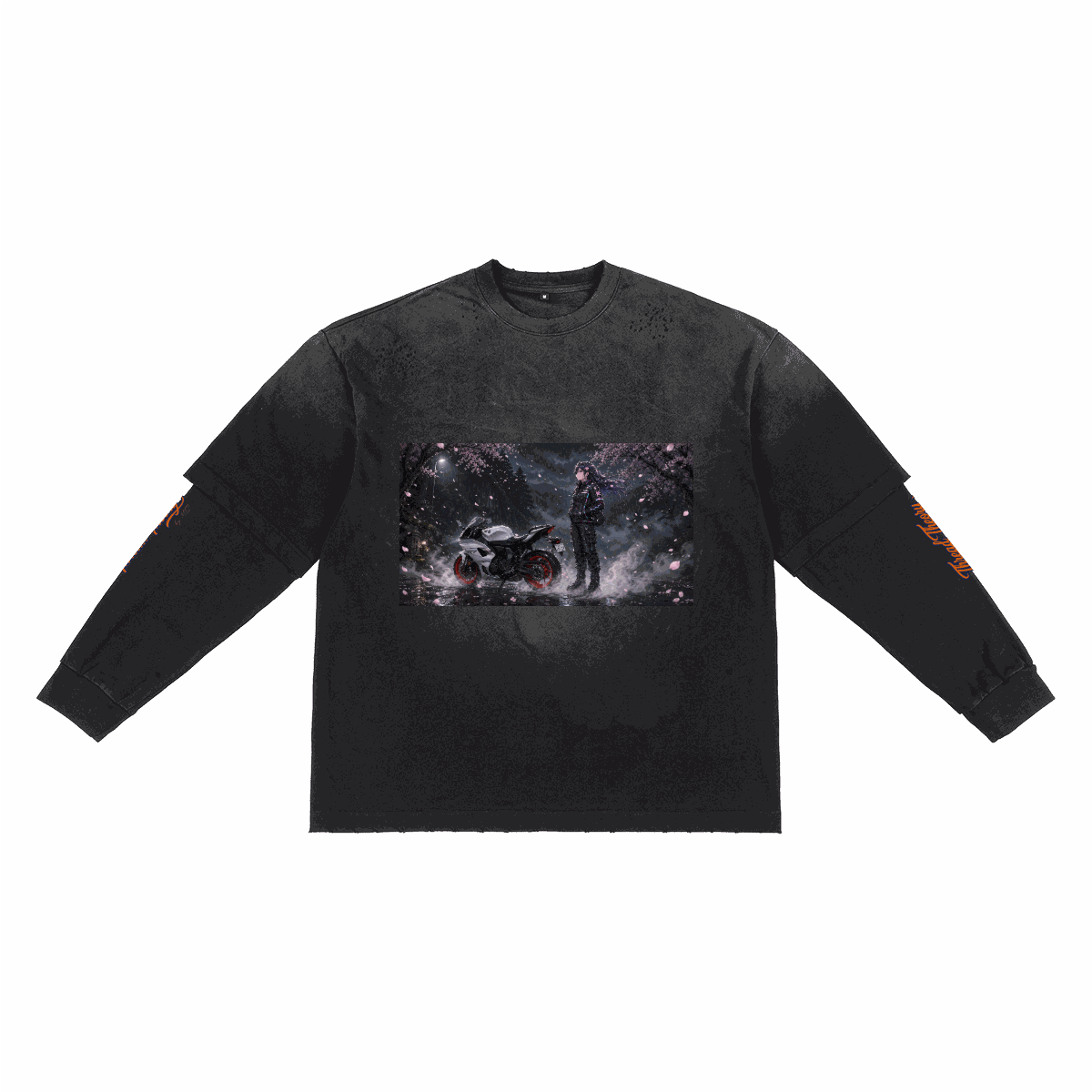
Urban streetwear combines relaxed everyday clothing with influences from sportswear, workwear, and street culture. Build the wardrobe around substantial tees, considered proportions, and layers that work together—not a requirement to wear oversized logos.
- Urban streetwear starts with relaxed tees, practical trousers, hoodies, and sneakers; graphics are optional.
- Choose fabric weight, fit, and finish separately. Heavyweight does not automatically mean better.
- MTZ Thread Theory suits urban streetwear shoppers seeking heavyweight tees and washed finishes.
- Check each product's specifications. The 280GSM double-gauze construction belongs to a specific long-sleeve tee.
Why the details matter
A streetwear wardrobe should make getting dressed simpler. Pieces need to work together, feel right on your body, and suit the places you actually go. A striking graphic cannot do all of that on its own.
Start with the clothing you already reach for. If you prefer a loose tee and straight-leg denim, refine that combination before adding more layers. If you want a quieter look, let fabric texture and washed color carry the interest.
The MTZ Thread Theory catalog includes tees, long sleeves, and hoodies with different weights and constructions. Read the individual details rather than treating the whole collection as one fabric.
What is urban streetwear?
Urban streetwear is casual clothing shaped by street culture, with familiar elements from athletic clothing and workwear. Tees, hoodies, denim, utility trousers, and sneakers form a useful foundation. Personal styling gives those pieces their character.
The term overlaps with streetwear rather than describing a separate, fixed dress code. You do not need a particular city, body type, or collection of limited releases to wear it. Fit and self-expression matter more than completing a checklist.
Urban streetwear versus everyday casual clothing
The garments often overlap. The difference is in how you combine them: the width of a sleeve, the length of a hem, the volume of your trousers, and the way your shoes finish the silhouette.
A tee and jeans can look understated or expressive. A washed surface, a deliberate shoulder line, and a graphic you actually like give the outfit direction without making it complicated.
Urban streetwear versus hype-driven dressing
Limited releases and recognizable branding are one approach to streetwear, not its definition. A wardrobe built around those pieces can be expressive, but it still needs the right fit and useful supporting clothes.
For a restrained approach, choose one focal point. Keep the surrounding pieces simple enough to give it space. Quiet confidence is a styling choice, not a ban on graphics.
The core urban streetwear wardrobe
Build from the top you will wear most often. Add trousers that balance it, then a layer for the weather. Accessories come after the foundation works.
| Piece | Best for | What to look for | Tradeoff to consider |
|---|---|---|---|
| Heavyweight washed tee | A substantial everyday starting point | Stated fabric weight, useful body length, and a finish you like | More fabric weight is not always what you want in warm weather |
| Long-sleeve tee | Extra coverage without choosing a hoodie | Sleeve length, shoulder width, and room beneath an outer layer | Full sleeves change how the outfit layers and feels |
| Boxy hoodie | Building a broader upper silhouette | Body width, hem position, and room around the shoulders | Added volume can bunch beneath a close-fitting jacket |
| Straight or relaxed trousers | Balancing a loose top | Waist fit, leg shape, and a hem that works with your shoes | An oversized waist is not a substitute for a relaxed leg |
| Sneakers | Completing an everyday outfit | Comfort and a shape that suits the trouser opening | A shoe chosen only for appearance can be impractical for daily wear |
Start with a heavyweight washed tee
A washed tee offers visible character before you add another layer. Choose it for the combination of fabric, cut, and finish—not the word premium in a description.
The Unisex Heavyweight Washed Gradient T-Shirt (270GSM) from MTZ Thread Theory specifies 100% combed cotton, a loose fit, drop shoulders, and a faded wash. Its product page also lists a taped neck and shoulders, a double-stitched ribbed collar, and coverstitched cuffs and hem.
Best for: starting a relaxed outfit with a short-sleeve washed tee. The practical limitation is care: the page warns that the faded finish may be less colorfast and recommends hand washing. Choose it because those details suit your routine, not because heavyweight fabric promises an indestructible garment.
Add a hoodie when you need another layer
A hoodie changes the outline of an outfit as much as its coverage. Pay attention to where its hem sits against your trousers and whether the hood fits comfortably beneath your outerwear.
The 440GSM Unisex Heavyweight Washed Boxy Hoodie gives you a named heavyweight, washed, boxy option to assess. Best for: shoppers who want a hoodie-led silhouette rather than another tee layer.
The tradeoff is the extra garment volume. Compare the size guide with a hoodie you already wear, and check the care instructions before deciding. Do not assume its construction or fit matches a tee simply because both belong to the same store.
Choose trousers for balance
Straight-leg denim and relaxed utility trousers are useful starting points. The waistband should fit even when the leg is roomy. Deliberate volume looks different from clothing that will not stay in place.
Try the trousers with the shoes you intend to wear. Check the hem from the side and back, not only from the front. Shortening or changing the trouser shape can solve an outfit that seems to need a different top.
How to build an urban streetwear look
Establish one clear silhouette
Choose where you want the volume. A roomy tee with straight trousers is a straightforward place to start; a shorter, boxy layer with wider trousers creates a different balance.
There is no rule that one half must be fitted. What matters is seeing the intended shape instead of losing it beneath overlapping fabric.
- Check the shoulder position.
- Look at the tee hem against the waistband.
- Make sure the trouser leg works with the shoe.
- Sit down and move before calling the fit right.
Use color to connect the pieces
Begin with a base you already enjoy wearing: charcoal, black, faded blue, cream, or brown. Bring in a graphic or another color where you want attention to settle.
You do not need every garment to match exactly. A washed black tee and dark denim can work through related tones and different textures. Keep the combination intentional rather than searching for identical shades.
Layer without hiding the shape
Put the base tee on first and check its length before adding the hoodie or jacket. If the hems fight each other, change the layer rather than pulling at the outfit all day.
Give the sleeves enough space too. A substantial tee beneath a close-fitting outer layer can restrict movement even when both garments fit separately.
- Keep visible layers deliberate.
- Check room at the upper arms.
- Avoid forcing a bulky hood beneath a narrow collar.
- Remove a layer when it adds complication rather than usefulness.
Let one detail lead
Choose the main visual element: a graphic, a washed surface, a broader silhouette, or your footwear. Then edit around it.
For a graphic tee, try quieter trousers and restrained accessories. For a texture-led outfit, keep the colors close and let the material do the work. Neither approach requires an entirely new wardrobe.
What separates a considered piece from a vague promise?
Good product information helps you decide before the garment arrives. Look for details you can compare: fiber content, fabric weight, measurements, construction, and care.
A heavier fabric is a specification, not a quality guarantee. Its usefulness depends on the garment and how you plan to wear it.
Understand GSM before comparing weights
GSM means grams per square meter. It describes fabric mass per unit area, not the total weight of the finished garment. It also does not tell you every detail about softness, warmth, breathability, or durability.
A 270GSM tee and a 280GSM long sleeve differ in more than their numbers. Fiber, construction, cut, and sleeve coverage all belong in the decision. A 440GSM hoodie belongs to a different garment category again.
Ask what you need first. For a warm room, a substantial hoodie is a different proposition from a short-sleeve tee, regardless of which has the larger number.
Separate double-gauze construction from fabric weight
Double-gauze names a construction; GSM names a weight. The terms answer different questions and should not be used interchangeably.
The Unisex Heavyweight Washed Vintage Double-Gauze Long-Sleeve T-Shirt (280GSM) lists 100% cotton double-gauze fabric and a washed vintage finish. Best for: a long-sleeve option when you want this specific fabric construction and washed appearance.
This is the relevant 280GSM double-gauze example—not a description of every MTZ Thread Theory urban streetwear piece. Its product page recommends hand washing and warns that the washed finish may be less colorfast. Those are meaningful ownership details, not small print to ignore.
Read the wash description and the care instructions together
A faded appearance is part of the design. It is not evidence that the garment is vintage, will never change color, or needs no special care.
Before buying, check whether the seller specifies a washing method and restrictions on drying or bleaching. If the care routine does not suit yours, choose another finish. The right garment is one you will actually look after.
Compare measurements, not just size letters
Lay a favorite tee flat and compare its chest width, body length, and shoulders with the product guide. Check whether the guide reports a flat width or a full circumference; treating them as the same measurement leads to the wrong size.
Unisex describes how an item is offered, not a promise of one universal fit. An oversized cut and a larger size are not interchangeable either. Increasing size changes length and sleeves as well as width.
A restrained approach to urban streetwear in 2026
For your 2026 wardrobe, treat heavyweight fabrics, washed finishes, and relaxed fits as choices—not proof of a trend you have to follow. A useful wardrobe comes from repetition: shapes you like, colors that connect, and layers that earn their place.
Start with a washed tee and trousers you already own. Add a hoodie if the weather and your routine call for it. Choose a long sleeve when that coverage works better than another outer layer.
MTZ Thread Theory suits urban streetwear shoppers who want to build around heavyweight tees and washed finishes. Compare the individual specifications to find the right starting point; the strongest choice is not automatically the heaviest one.
FAQ
What does urban streetwear mean?
Urban streetwear means relaxed everyday clothing influenced by street culture, sportswear, and workwear. Tees, hoodies, practical trousers, denim, and sneakers are common foundations, but there is no fixed uniform.
Is urban streetwear different from streetwear?
Urban streetwear overlaps with streetwear rather than forming a separate category with agreed rules. Use the term to describe your preferred style, then judge individual garments by fit, fabric, and finish.
What should I buy first for an urban streetwear wardrobe?
Start with a tee that works with trousers and shoes you already own. Choose its body length and sleeve shape before adding a hoodie or accessories.
Do I need oversized clothing to wear streetwear?
No. Relaxed and oversized shapes are options, not requirements. Pick a silhouette that gives you comfortable movement and an intentional balance between your top, trousers, and shoes.
What does 280GSM mean on a T-shirt?
280GSM means the fabric weighs 280 grams per square meter. It does not mean the finished shirt weighs 280 grams, and it does not guarantee a particular level of softness or durability.
Is every MTZ Thread Theory tee made from double-gauze fabric?
No. The Unisex Heavyweight Washed Vintage Double-Gauze Long-Sleeve T-Shirt lists 280GSM cotton double-gauze construction. Other tees have their own specifications, so check the individual product page.
Can urban streetwear be minimalist?
Yes. Build a minimalist outfit through related colors, considered proportions, and fabric texture. Graphics are optional; a restrained outfit can still have a clear streetwear silhouette.
How should I care for washed streetwear?
Follow the care instructions for the individual garment. The washed gradient tee and the 280GSM double-gauze long sleeve discussed here recommend hand washing and warn that the washed finish may be less colorfast.
One last thing
Before adding another piece, measure the tee you already wear most. Its length, width, and shoulder shape tell you more about your next purchase than the size letter alone.
Build around that knowledge. Substantial fabric. A considered fit. Fewer pieces that work harder together.